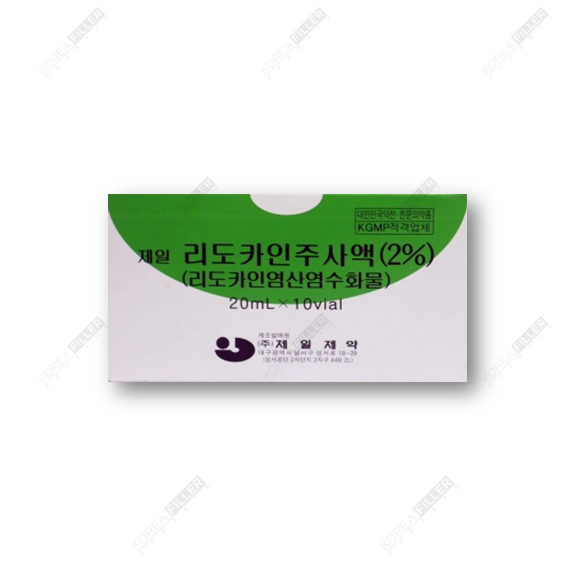
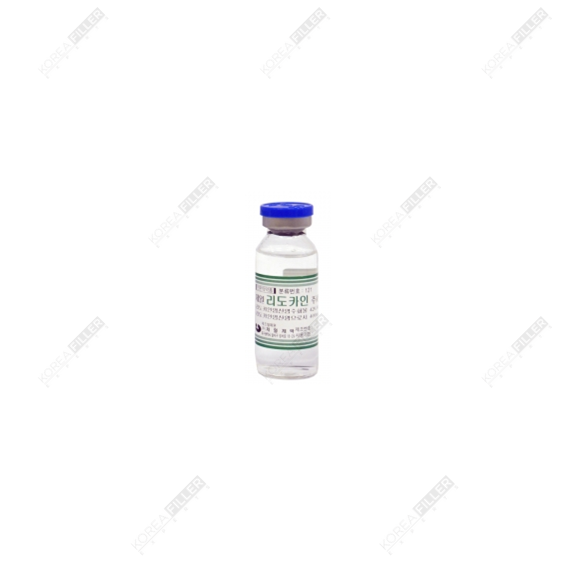
Lidocaine HCl Inj. 2%
Sterile lidocaine HCl 2% injection · 20 mL vials, 10 per box · DAIHAN, South Korea · prescription-only medicine.
$59.90
You save
- Lidocaine HCl Inj. 2% is a sterile injectable local anesthetic from DAIHAN, used for epidural anesthesia, infiltration, nerve blocks, and ventricular arrhythmia management. It’s supplied in 20mL vials, 10 per box, for licensed medical professional use only.
Professional use only. This product is intended for administration by licensed healthcare practitioners trained in the relevant anatomy and injection technique. By ordering you confirm you are authorised to purchase and handle products of this class in your jurisdiction. Availability and permitted use vary by country — please verify local regulations before ordering.
Did you like this product? Add to favorites now and follow the product.

(+82) 10 7364 7998 Send a message on WhatsApp.
Lidocaine HCl Inj. 2%: an injectable local anaesthetic from DAIHAN
Lidocaine HCl Inj. 2% is a sterile injectable local anaesthetic from DAIHAN in South Korea. Each 1 mL contains 21.33 mg of lidocaine HCl (2%). It is listed for epidural anaesthesia, infiltration, surface anaesthesia and nerve block, and for the management of ventricular arrhythmias in internal medicine.
Each box contains 10 vials of 20 mL. It is a prescription-only medicine and is for use only by licensed medical professionals in appropriate clinical settings.
21.33 mg per mL.
Epidural, infiltration, surface and nerve block.
A practical supply for regular clinical use.
For licensed medical professionals in clinical settings.
About Lidocaine HCl Inj. 2%
A sterile solution of lidocaine HCl 2% in 20 mL vials.
Listed for epidural, infiltration, surface anaesthesia and nerve block.
Also listed for the management of ventricular arrhythmias.
Ten 20 mL vials per box.
Listed uses
The uses listed for Lidocaine HCl Inj. 2%, as described on our previous page.
Epidural anaesthesia, infiltration, surface anaesthesia and nerve block.
Used to support comfort during invasive dermatological procedures.
Listed for the management of ventricular arrhythmias.
Lidocaine HCl Inj. 2% is a prescription-only medicine. How it is classified and what it may be used for are set by the regulatory framework where you practise. Korea Filler Experts supplies the product to qualified professionals. Nothing here is a recommendation to use it for any condition, and nothing here replaces the prescribing information or your training.
Lidocaine HCl Inj. 2% specification
| Product type | Injectable local anaesthetic (prescription-only) |
| Composition | Each 1 mL contains lidocaine HCl 21.33 mg (2%) |
| Form | Sterile injectable solution |
| Vial size | 20 mL |
| Packing | 20 mL × 10 vials per box |
| Storage | Below 25 °C, protected from light |
| Manufacturer | DAIHAN, South Korea |
Before you order
- Prescription-only medicine. Lidocaine HCl Inj. 2% is a prescription-only injectable. It is supplied to licensed medical professionals and institutions, and rules on importing and holding it differ by country. Confirm that you are permitted to import and use it where you practise.
- Every box ships in its original packaging with the lot number and expiry date.
- We do not dispatch stock with under 6 months of shelf life remaining unless agreed in advance.
Priced per box (10 vials), with quantity discounts at five, ten and twenty boxes.
What each component does
Lidocaine HCl 2%
Lidocaine is an amide-type local anaesthetic. It stabilises the nerve cell membrane by blocking the ion exchange nerves need to start and conduct pain signals, so the treated area loses sensation for the duration of the effect. The same membrane-stabilising action is the basis for its listed use in ventricular arrhythmias.
Injectable and topical anaesthetics
Unlike a topical numbing cream, which acts on the surface layers of the skin, an injected anaesthetic reaches nerve tissue directly. It is therefore used for deeper, more invasive procedures.
Administration
This product is administered only by licensed medical professionals. Dose, concentration and technique depend on the area being anaesthetised, tissue vascularity, the number of nerve segments to be blocked, the patient’s tolerance and the technique used. Refer to the manufacturer’s prescribing information for dosing and maximum limits.
Step by step
-
Assess the patient
Review medical history, allergies and current medication, including any known hypersensitivity to amide-type local anaesthetics.
-
Select the dose and technique
Use the lowest concentration and dose that gives the required effect, following the prescribing information and your training.
-
Administer in a suitable setting
Administer where monitoring and resuscitation equipment are available.
-
Monitor
Observe the patient for signs of systemic reaction during and after administration.
Administration notes
Single-dose vials. Use each vial for one patient only and discard any unused portion.
- Do not exceed the maximum recommended dose in the prescribing information.
- Adjust the dose to the patient’s response, the injection site and individual tolerance.
- Do not use in patients with known hypersensitivity to amide-type local anaesthetics.
Storing and handling Lidocaine HCl Inj. 2%
Store below 25 °C.
Keep vials in their original packaging until use.
Single-dose vials: one patient only. Discard any unused portion.
Do not use if the packaging is damaged, the solution is discoloured or contains particles, or the expiry date has passed. Dispose of used vials, syringes and needles as clinical waste in line with local requirements.
What's included with Lidocaine HCl Inj. 2%
Syringes and needles are not supplied.
Lidocaine HCl Inj. 2% — frequently asked questions
What is Lidocaine HCl Inj. 2%?
A sterile injectable local anaesthetic made by DAIHAN, listed for epidural anaesthesia, infiltration, surface anaesthesia, nerve block and the management of ventricular arrhythmias.
What is in each box?
Ten vials of 20 mL.
How is the dose decided?
The dose depends on the area being anaesthetised, tissue vascularity, the number of nerve segments involved, patient tolerance and the technique used. Generally the lowest effective dose is preferred. Follow the manufacturer’s prescribing information.
Is it for injection or topical use?
It is injected. It is not a topical numbing cream.
Who can administer it?
Only licensed medical professionals, following appropriate clinical protocols.
Is it a prescription medicine?
Yes. It is a prescription-only injectable. Confirm the import and use rules where you practise.
Customer Reviews
Share your experience with this product. Your honest review helps other customers make better choices.
- Sort By
- Newest
- Oldest
- Highest Rating
- Lowest Rating
About a week shipping to Florida USA . Great product.

Copyright 2026 © Korea Filler Experts. All right reserved.
