Laennec Inj.
Human placenta hydrolysate for injection · 2 mL vials · boxes of 10 or 50 · Japan Bio Products (JBP) · professional use only.
$319.90
- Human placenta hydrolysate, 2 mL vials
- Boxes of 10 or 50
- Japan Bio Products (JBP)
- Professional use only
Professional use only. This product is intended for administration by licensed healthcare practitioners trained in the relevant anatomy and injection technique. By ordering you confirm you are authorised to purchase and handle products of this class in your jurisdiction. Availability and permitted use vary by country — please verify local regulations before ordering.
Did you like this product? Add to favorites now and follow the product.

(+82) 10 7364 7998 Send a message on WhatsApp.
Laennec Inj: human placenta hydrolysate, labelled in Korea for chronic liver disease
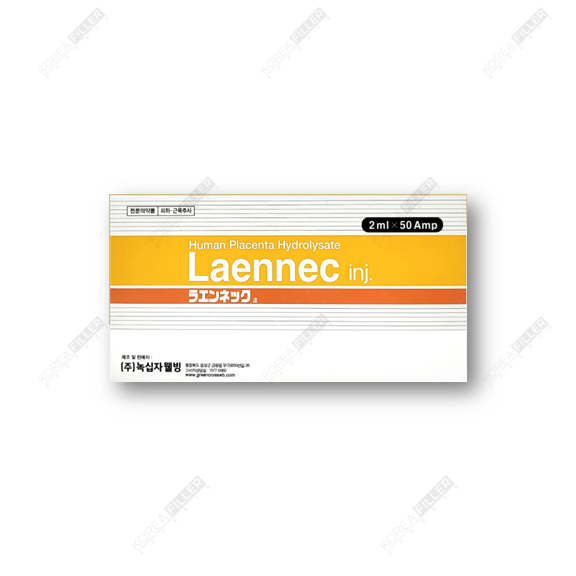
Laennec Inj. is a human placenta hydrolysate injection made by Japan Bio Products (JBP). It is supplied as 2 mL vials, in boxes of 10 or 50, as a clear yellow-brown liquid with a characteristic odour.
In Korea the product is registered by the drug regulator for improvement of liver function in chronic liver disease, and it is given by subcutaneous or intramuscular injection. Our previous page also listed skin rejuvenation, vitality and menopause support, which are not part of the Korean label. It is a prescription medicine made from human tissue, for use by licensed healthcare professionals. Dose and route follow the package insert and the prescriber.
A hydrolysed extract of human placenta, supplied as a clear yellow-brown solution.
2 mL vials in the manufacturer's original packaging with lot number and expiry.
Improvement of liver function in chronic liver disease.
A prescription medicine made from human tissue. Follow the package insert.
About Laennec Inj.
Approved by the Korean drug regulator in 2011 for improving liver function in chronic liver disease.
A Korean trial in 194 patients with alcoholic or non-alcoholic fatty liver disease, treated for up to six weeks, found it not inferior to the comparator for improving ALT, with 1.05 percent of patients reporting a drug-related reaction (a rash).
The Korean label notes that donors are interviewed and tested and that the process includes heat treatment.
Each carton shows the lot number and expiry date.
Use and information
The first item is the use on the Korean label. The remaining items are uses our previous page listed, which are not part of the Korean label. Approved indications differ by market, so follow the package insert for your country.
Improvement of liver function in chronic liver disease.
Skin firmness and elasticity, and skin concerns such as acne scarring. Not part of the Korean label; whether it is appropriate is for the prescriber to decide.
General energy and recovery. Not part of the Korean label.
Support during transitions such as menopause. Not part of the Korean label.
Laennec Inj. is a prescription medicine made from human tissue. Which uses are permitted and who may supply or administer it are set by the regulatory framework where you practise. Korea Filler Experts supplies the product to licensed professionals. Nothing here is medical advice or a recommendation to treat any condition.
What is inside Laennec Inj.
| Product type | Human placenta hydrolysate solution for injection |
| Active ingredient | Human placenta hydrolysate |
| Packing | 2 mL vials, boxes of 10 or 50 (pack shown on the carton) |
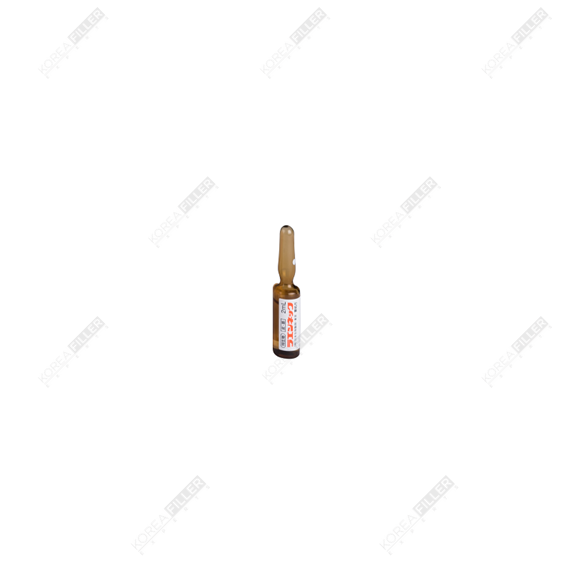
| Appearance | Clear yellow-brown liquid in a brown vial, with a characteristic odour |
| pH | 5.5–6.5 |
| Labelled use (Korea) | Improvement of liver function in chronic liver disease |
| Storage (Korean label) | Light-protected, sealed, room temperature (1–30 °C) |
| Manufacturer | Japan Bio Products (JBP) |
Before you order
- This is a prescription medicine made from human tissue. Order only if you are licensed to prescribe, administer or supply it where you practise, and check the import rules for your country, because rules for human-derived products can be stricter.
- The Korean label states that the risk of infection from a product made from human placenta cannot be excluded completely, so it should be used at the minimum necessary amount, and the patient should be told.
- Check the pack size on the carton (10 or 50 vials).
- We do not dispatch stock with under 6 months of shelf life remaining unless agreed in advance.
Quantity discounts apply at five, ten and twenty boxes.
What each component does
Human placenta hydrolysate
The active ingredient is a hydrolysed extract of human placenta, which contains amino acids, peptides and other substances. The Korean label lists it as the only active ingredient. The Korean marketing company is Greencross WB, and the product is made by Japan Bio Products.
Labelled use in Korea
Improvement of liver function in chronic liver disease. The Korean label reminds users that the product’s indication is this, and that it should be used accordingly.
Packing
2 mL vials, in boxes of 10 or 50. The carton shows the pack size, lot number and expiry date.
How it works
Placenta hydrolysate is a hydrolysed extract of human placenta that contains amino acids, peptides and other substances. The Korean drug information classifies it as a liver-protecting medicine, and its patient leaflet describes it as stabilising liver cell membranes and helping to protect and regenerate damaged liver cells.
Handling and preparation
General handling points for trained professionals. The package insert and your prescriber’s instructions take precedence over this page, and we do not give dosing advice.
Step by step
-
Check the product
Confirm the name, lot number and expiry on the carton and vial. The solution should be clear and yellow-brown; do not use it if it is cloudy or contains particles.
-
Explain the product to the patient
Tell the patient the product is made from human placenta and that the risk of infection cannot be excluded completely.
-
Review the patient
Check for hypersensitivity and allergic constitution, and for pregnancy or breastfeeding status.
-
Administer as directed
Give by subcutaneous or intramuscular injection as the package insert directs, avoiding nerve pathways and rotating the site on repeat injections. If severe pain or blood return occurs, withdraw and use another site.
-
Discard the remainder
Single use. Discard any unused solution and the vial as clinical waste in line with local rules.
Administration notes
Use only as directed. Dose, interval and route come from the package insert and the prescriber, not from this page.
- Do not use in patients with known hypersensitivity to the product or its components.
- Use with care in patients with an allergic constitution.
- Shock cannot be ruled out because the product is a protein and amino acid preparation of human origin. Stop and treat if it occurs.
- Mixing with strongly basic drugs of pH 8.5 or above can reduce activity.
- Single use only. Do not reuse.
Storing and handling Laennec Inj.
The Korean label gives a light-protected, sealed container at room temperature (1–30 °C). Follow the carton and package insert for your batch.
Keep vials in their original carton until use. Check the seal, appearance and expiry.
Each vial is a single dose. Use immediately and discard any remainder.
Do not use if the packaging is damaged or the expiry date has passed. Dispose of used vials, syringes and needles as clinical waste in line with local requirements.
What's included with Laennec Inj.
Syringes and needles are not included. Check the package insert for what you need to administer the product.
Laennec Inj. — frequently asked questions
What is Laennec Inj?
A human placenta hydrolysate injection from Japan Bio Products, supplied as 2 mL vials. In Korea it is marketed by Greencross WB.
What is it labelled for?
In Korea, improvement of liver function in chronic liver disease. Approved uses differ by country, so check the package insert for your market.
Which other uses did your old page list?
Skin rejuvenation, skin concerns such as acne scarring, general vitality and recovery from fatigue, and support during hormonal transitions such as menopause. These are not part of the Korean label, and any use beyond the label is the prescriber’s responsibility.
What does the Korean evidence show?
A Korean re-evaluation trial in 194 patients with alcoholic or non-alcoholic fatty liver disease, treated for up to six weeks, found it not inferior to the comparator for improving ALT, and 1.05 percent of patients had a drug-related reaction, which was a rash.
How is it given?
By subcutaneous or intramuscular injection, as the package insert directs. We do not give dosing advice.
Which side effects are listed?
Shock (cannot be ruled out); chills, fever and rash; pain, redness and hardening at the injection site; and, occasionally, breast enlargement in males.
Who should avoid it?
People with hypersensitivity to the product. Use with care in people with an allergic constitution. Our previous page advised against use in infants, children, and during pregnancy or breastfeeding; the Korean label says safety in children has not been established.
Is it made from human tissue?
Yes. It is made from human placenta, and the Korean label states that the risk of infection cannot be excluded completely.
Who can buy this product?
It is a prescription medicine, supplied to licensed healthcare professionals and not to consumers. You are responsible for checking that you may import and use it where you practise.
Customer Reviews
Share your experience with this product. Your honest review helps other customers make better choices.
- Sort By
- Newest
- Oldest
- Highest Rating
- Lowest Rating
Super fast shipping great service

Copyright 2026 © Korea Filler Experts. All right reserved.
