NEO Eye Cannula (Mono): U-Type
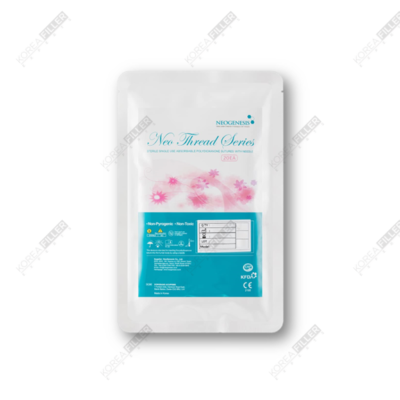
Polydioxanone (PDO) mono thread on a blunt U-type cannula · 29G and 30G · for periorbital skin. 10 pieces per pack.
$34.90
Neo Eye Thread Mono PDO is a polydioxanone threads used for the thread lifting of the area around eyes. Mono threads are the linear threads based on a single fiber for the treatment of the area around eyes.
Types example :
| Model Code | Needle Size | Needle Length | Threads Length | USP |
| M3112 | 31G | 12mm | 16mm | 7-0 |
- Sourced through licensed Korean distribution channels
- Temperature-controlled handling from our facility to your door
- Batch number and expiry visible before dispatch
- Practitioner support from our team
Professional use only. This product is intended for administration by licensed healthcare practitioners trained in the relevant anatomy and injection technique. By ordering you confirm you are authorised to purchase and handle products of this class in your jurisdiction. Availability and permitted use vary by country — please verify local regulations before ordering.
Did you like this product? Add to favorites now and follow the product.

(+82) 10 7364 7998 Send a message on WhatsApp.
A fine mono thread on a blunt cannula, built for the eye area
NEO Eye Cannula (Mono) is a single smooth polydioxanone filament delivered through a blunt U-type cannula at 29G or 30G. It exists because the periorbital area tolerates very little.
Skin around the eye is the thinnest on the face, sits directly over a dense vascular network, and shows everything. A sharp needle passing through it bruises readily and gives no warning before it meets a vessel. A blunt cannula displaces vessels rather than cutting them, which is why it is the sensible delivery format here even though it requires a separate entry port.
What this treats is skin quality, not contour. The filament is smooth, so it stimulates collagen along its track and thickens thin skin. It does not lift, and — importantly for this area — it does nothing about under-eye bags, which are a different problem entirely.
A blunt tip displaces periorbital vessels rather than cutting them — the main reason to choose a cannula here.
A smooth filament thickens thin periorbital skin over weeks. It does not lift and does not reduce bags.
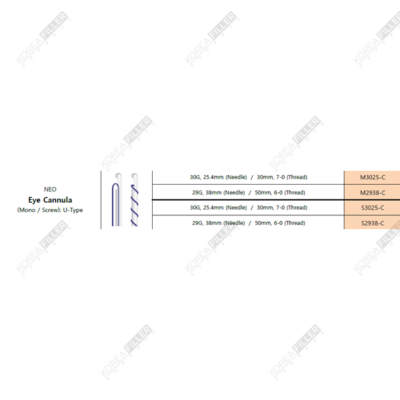
29G × 38 mm and 30G × 25 mm — sized for the thinnest skin on the face.
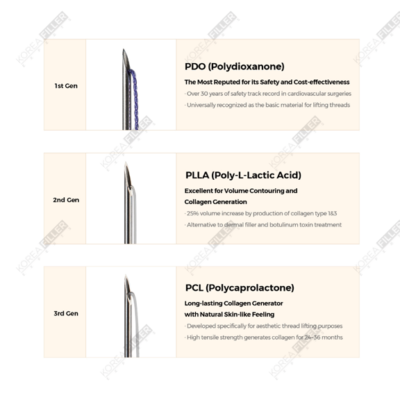
PDO breaks down over roughly six months. The collagen laid down around it persists longer.
Why practitioners stock NEO Eye Cannula (Mono)
The periorbital area is densely vascular and shows bruising for weeks. A blunt tip is the single biggest reduction in downtime available here.
29G and 30G with short cannulas. Standard facial thread gauges are too heavy for skin this thin.
Crepey, thinning periorbital skin responds to collagen stimulation. The page is explicit about what it will not do, which makes consultations easier.
We stock the same cannula format with a coiled filament, for when you want more material in the same track.
Treatment areas
Periorbital applications for a smooth PDO thread. All are skin-quality indications — nothing here repositions tissue or addresses orbital fat.
Fine crinkled texture at the lateral and lower orbital skin, where the dermis has thinned. The core indication for this product, and what the 30G short cannula exists for.
Static fine lines produced by thin, inelastic skin rather than by muscle movement. Lines driven primarily by orbicularis activity are a botulinum toxin question instead — the two are often present together.
Improving dermal thickness in lax lower lid skin. Distinct from treating a fat-pad bulge, which no thread addresses.
Frequently combined with toxin for dynamic lines or tear-trough filler for volume. Threads contribute skin quality; they are rarely the whole plan in this region.
PDO threads are sterile implantable medical devices. Which applications are permitted, and what training is required, is determined by the regulatory framework where you practise. Korea Filler Experts supplies the product; nothing here is a recommendation to treat any medical condition, and nothing here substitutes for hands-on training in periorbital technique.
Available sizes and specifications
| M2938-C | 29G · 38 mm cannula · 50 mm thread · USP 6-0 |
| M3025-C | 30G · 25 mm cannula · 30 mm thread · USP 7-0 |
| Material | Polydioxanone (PDO) |
| Thread surface | Smooth — no barbs or cogs |
| Delivery | Blunt-tipped U-type cannula |
| Pack size | 10 pieces per pack |
| Sterilisation | Sterile, single use only |
| Storage | Room temperature, dry, away from sunlight |
Checking the pack
- The model code matches your order — M2938-C and M3025-C differ in both gauge and length.
- Each blister is intact and dry. A breached sterile barrier makes that unit waste.
- The expiry date is clear. PDO hydrolyses with moisture.
- The pack holds 10 pieces, not the 20 of our general facial packs.
Entry needles are required and not supplied. A blunt cannula cannot make its own entry port — and in periorbital skin, where you site that port is itself a planning decision.
What each component does
Skin laxity versus fat herniation — the periorbital distinction
Patients arrive asking about “bags”, and that word covers two unrelated problems with two unrelated answers.
- Thin, crepey, lax skin — the skin itself has lost thickness and elasticity. This is what a PDO thread addresses: collagen stimulation thickens the dermis along the treated tracks.
- Herniated orbital fat — the fat pads behind the orbital septum have pushed forward, producing a true under-eye bulge. No thread affects this. It is a surgical problem, addressed by blepharoplasty.
An earlier version of this listing claimed “elimination of bags under eyes”. We have removed it, because a patient with fat herniation treated with threads will see no change and will be entitled to be unhappy about it. Separating the two at consultation — ideally with the patient looking up and the skin assessed on stretch — is the difference between a good outcome and a refund.
Reading the specifications
- 29G and 30G — cannula diameter; higher number means thinner. These are the two finest cannula gauges in the NEO range.
- Cannula vs thread length — the filament extends beyond the cannula so it stays in tissue as it withdraws. A 38 mm cannula carries 50 mm of thread.
- USP 6-0 and 7-0 — filament thickness on the standard suture scale, where more zeros means thinner. 7-0 is the finest in the range.
How to use NEO Eye Cannula (Mono)
Reference information for practitioners already trained in periorbital work. This is the least forgiving area on the face: skin is thinnest, vasculature is dense, and anything placed too superficially is visible in a region patients examine closely every day.
Step by step
-
Assess skin, not just appearance
Distinguish lax skin from fat herniation before planning anything. Assess with the patient looking up and the skin on gentle stretch. If the bulge is fat, this is the wrong treatment and saying so now saves a great deal later.
-
Plan entry and tracks with the patient upright
Mark entry points and intended tracks before they lie down. Site entries where a small mark will be inconspicuous.
-
Prepare and anaesthetise
Thorough antisepsis — this is an implant. Topical anaesthetic is usually adequate at these gauges; a small amount of local at the entry port if needed.
-
Create the entry port
Make the entry with a sharp needle of appropriate gauge. The blunt cannula cannot penetrate intact skin.
-
Advance in the subdermal plane
Introduce the cannula and advance along the marked track. Stay deep enough that the thread is neither visible nor palpable — in skin this thin the margin is small, and too superficial is the error that shows.
-
Withdraw and inspect
Withdraw the cannula while holding the thread. Inspect the area in good light at several angles before placing the next one; periorbital irregularity is far easier to prevent than to correct.
-
Trim flush
Trim protruding thread at skin level with the tissue in neutral position.
Administration notes
Consultation decides the outcome here more than technique does. The commonest failure in periorbital thread work is treating the wrong problem — placing threads in a patient whose concern is herniated fat. They will return at six weeks reporting no change, and they will be right.
Be conservative on thread count. Periorbital skin accommodates far less material than the cheek. Fewer, well-placed threads at correct depth beat a dense mesh in this region.
- Single use. Never re-sterilise or reuse a cannula or thread.
- Do not place over active infection, blepharitis, or recently placed tear-trough filler.
- Stay well clear of the orbital rim and the globe. Nothing goes inside the orbital septum.
- Dispose of entry needles into a sharps container per local clinical waste requirements.
After treatment
- Bruising and swelling in the periorbital area are common and can persist a week to ten days — longer than elsewhere on the face. Tell patients before, not after.
- Sleep with the head elevated for the first several nights
- No eye rubbing, vigorous cleansing or facial massage for two weeks
- No saunas, steam rooms or strenuous exercise for 48 hours
- Advise against eye make-up for 24 hours and contact lens insertion for the first day
- Any visual disturbance, severe pain or spreading redness needs same-day assessment
Storing and handling NEO Eye Cannula (Mono)
Store at room temperature in a dry place, away from direct sunlight. No refrigeration and no cold chain.
Each unit is individually sealed and sterile. Do not use any whose blister is open, torn, damp or damaged. Never re-sterilise — autoclaving destroys PDO.
29G and 30G cannulas bend easily. A kinked cannula will not track predictably through tissue — discard it rather than straightening it.
Single use only. Do not reuse, re-sterilise or repackage. Dispose of used cannulas and entry needles into a sharps container, and unused product as clinical waste in line with local requirements.
What's included
Entry needles are required and not supplied — a blunt cannula cannot make its own entry port. Antiseptic, topical anaesthetic and sharps disposal are also not included.
NEO Eye Cannula (Mono) — frequently asked questions
What is this product?
A single smooth polydioxanone filament delivered through a blunt U-type cannula at 29G or 30G, intended for the periorbital area. The cannula is blunt, so it displaces vessels rather than cutting them.
Will it get rid of under-eye bags?
No — and the earlier version of this listing was wrong to say it would.
“Bags” usually means herniated orbital fat: the fat pads behind the orbital septum pushing forward. No thread reaches or affects that. It is a surgical problem.
What threads do address is thin, crepey, lax periorbital skin. Those are different problems that happen to produce similar complaints, and separating them at consultation is the most important thing you will do in this appointment.
How do I tell laxity from fat herniation?
Assess with the patient looking upward and the skin gently stretched. Laxity flattens out on stretch and the texture change is in the skin itself. A fat bulge persists regardless of skin tension and often becomes more obvious on upgaze.
If you are uncertain, treating is the wrong default — refer or review rather than place threads and hope.
Why a cannula instead of a needle here?
The periorbital area has dense superficial vasculature and skin thin enough to show bruising for a fortnight. A blunt cannula pushes vessels aside rather than cutting through them, which substantially reduces that.
The cost is that you need a sharp needle to make the entry port first.
How does this differ from the Screw version?
Same cannula format, same gauges, same blunt delivery. The difference is the filament: this one is a single straight strand, the Screw version is a coiled one that puts more PDO into the same track.
Choose Mono for the lightest touch in the thinnest skin, Screw when you want more stimulus from the same number of passes.
Will it lift the eyelid or brow?
No. Smooth threads have no barbs and cannot reposition tissue anywhere, including here. Anything described as thread lifting of the brow requires barbed threads and a different anatomical approach entirely.
How soon will the patient see a change?
The collagen response builds over roughly four to eight weeks. Anything visible in the first week is swelling, not result.
Periorbital bruising also lasts longer than elsewhere on the face — seven to ten days is normal. Patients should hear this before treatment, not after.
How long does the effect last?
The PDO hydrolyses over roughly six months; the collagen laid down around it persists beyond that. Most clinics review at six to nine months and plan from what they see rather than promising a figure.
Do they need refrigeration?
No. Room temperature, dry, out of direct sunlight — no cold chain to manage.
Who can buy and use these?
Threads are sterile implantable medical devices. Periorbital work requires specific training in that anatomy — the margin for error is smaller here than anywhere else on the face. We supply to practitioners qualified to perform the procedure in their jurisdiction, and do not sell to consumers.

Copyright 2026 © Korea Filler Experts. All right reserved.
