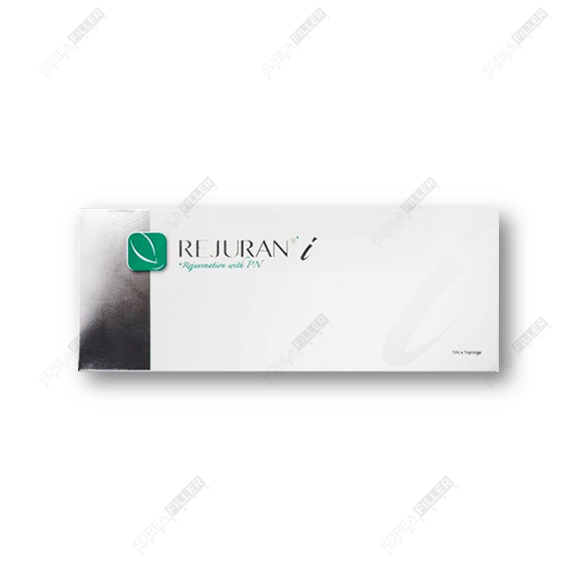
Rejuran I
Low-viscosity polynucleotide for the periorbital area · 1 cc vial · PharmaResearch, South Korea. Formulated for thin eyelid skin.
$103.90
Rejuran I is a low-viscosity PDRN skin booster from PharmaResearch, formulated with reduced concentration specifically for the delicate periorbital area, addressing dark circles, crow’s feet, and crepey under-eye skin.
Professional use only. This product is intended for administration by licensed healthcare practitioners trained in the relevant anatomy and injection technique. By ordering you confirm you are authorised to purchase and handle products of this class in your jurisdiction. Availability and permitted use vary by country — please verify local regulations before ordering.
Did you like this product? Add to favorites now and follow the product.

(+82) 10 7364 7998 Send a message on WhatsApp.
The Rejuran formula made for skin around the eye
Rejuran I is the periorbital formula in PharmaResearch’s line — the same salmon-derived polynucleotide platform, reformulated at lower viscosity and reduced concentration specifically for eyelid skin.
The reason a separate formula exists is simple and physical. Skin around the eye is the thinnest on the body. A standard-concentration PN booster placed there produces papules that are visible, palpable and slow to resolve — in an area the patient examines in the mirror several times a day. Reducing viscosity and concentration gives a product that settles cleanly where the standard formula does not.
Before you treat, work out what kind of dark circle you are looking at. It is the single most consequential assessment in periorbital work, and PN only helps with one of the three common causes. The Composition section below sets out how to tell them apart.
Lower viscosity and reduced concentration, so papules settle cleanly in skin that shows everything.
Formulated to pass through a fine needle for controlled placement in a dense vascular field.
The salmon-derived polynucleotide used across the Rejuran range, at a concentration suited to eyelid skin.
Dark circles have several causes. PN addresses skin quality — not vascular show-through or structural hollowing.
Why practitioners choose Rejuran I
Reduced viscosity and concentration are deliberate formulation choices for eyelid skin — not a standard product used off-label in a delicate region.
The practical failure of standard-concentration PN around the eye is persistent visible bumps. This is the formula that avoids that.
Thin, finely crinkled periorbital skin responds well to improved dermal density — the clearest and most reliable indication for this product.
Commonly combined with botulinum toxin for dynamic lines or with tear-trough filler for structural volume, at separate appointments.
Treatment areas and indications
Periorbital applications for low-viscosity PN. All are skin-quality indications — this product does not fill hollows or address pigment.
Fine crinkled texture in thin lower-lid and lateral orbital skin. The most reliable indication for this product, and the one where results are most consistent.
Blue-purple show-through of the underlying venous plexus through translucent skin. Increasing dermal density reduces translucency — this is where PN genuinely helps with dark circles.
Lines present at rest, driven by thin inelastic skin rather than muscle activity. Lines that appear only on animation are a toxin question instead.
Improving skin quality in combination with tear-trough filler or toxin, where each addresses a different contributor to the same visible complaint.
Skin boosters are injectable medical products. Which indications are permitted, and what training is required, is determined by the regulatory framework where you practise. Korea Filler Experts supplies the product; nothing here is a recommendation to treat any medical condition, and nothing here substitutes for manufacturer training.
What is inside Rejuran I
| Active | Polynucleotide (PN), salmon-derived |
| Viscosity | Low — formulated for thin periorbital skin |
| Concentration | Reduced relative to standard Rejuran Healer |
| Anaesthetic | None — consider topical anaesthesia |
| Presentation | 1 cc vial |
| Typical course | 3–4 sessions, 2–4 weeks apart |
| Review interval | Commonly 6–12 months after a completed course |
| Route | Intradermal, periorbital |
| Manufacturer | PharmaResearch, South Korea |
| SKU | 08034 |
Before you order
- Check the lot number and expiry on the carton against the vial.
- We do not dispatch stock with under 6 months of shelf life remaining unless agreed in advance.
- Store as stated on the carton. Do not freeze, and protect from light.
- Plan topical anaesthetic — there is no lidocaine in this formula.
Tiered pricing applies from 5 units. Since this is a course-based treatment, most clinics order in multiples.
What each component does
Three kinds of dark circle, and which one this treats
Patients describe all of these as “dark circles”. They have different causes and different answers, and getting this wrong is the main reason periorbital treatments disappoint.
- Pigmented — genuine melanin deposition in the periorbital skin, often constitutional and more common in deeper skin types. Does not change with lighting or position. PN improves the surrounding skin quality but does not address pigment; this needs a pigment-directed approach.
- Vascular — the blue-purple show-through of the underlying venous plexus, visible because the overlying skin is thin and translucent. This is where Rejuran I genuinely helps: increasing dermal density makes the skin less translucent, so there is less to see through. Stretching the skin gently makes vascular circles fade — a useful bedside test.
- Structural — shadow cast by tear-trough hollowing and loss of midface volume. Changes markedly with lighting angle and improves when the patient lies back. No booster fills a hollow; this is a filler or a surgical conversation.
Most patients have a combination, and establishing the proportions at consultation is what makes the treatment plan honest. A patient with predominantly structural shadow treated with PN alone will see very little, however well you inject.
Why a separate formula for this area
Standard-concentration PN placed in eyelid skin leaves papules that are visible and slow to resolve, because there is almost no tissue depth to conceal them. Reducing viscosity and concentration produces a product that disperses more readily in thin skin and settles within a normal timeframe.
It is a genuine reformulation rather than a marketing distinction — and it is the reason not to simply use Healer around the eye.
PN or PDRN?
Both terms describe purified DNA polymers from salmon or trout and are used interchangeably across most of the market. The distinction is molecular weight — PDRN generally shorter-chain, PN longer. A 2025 review proposed a 1500 kDa boundary, but that is a naming convention rather than a regulatory standard. No controlled head-to-head study establishes that one outperforms the other.
How to use Rejuran I
Reference information for practitioners trained in periorbital injection. This is the least forgiving area on the face — dense vasculature, minimal tissue depth, and a region the patient inspects daily.
Step by step
-
Establish the cause of the dark circle
Stretch the skin gently: vascular circles fade. Recline the patient: structural shadow improves. Pigment does neither. Treat only what PN can address, and say what it cannot.
-
Plan anaesthesia
No lidocaine in this formula. Topical anaesthetic with adequate dwell time, applied carefully clear of the eye itself.
-
Cleanse and remove all make-up
Thorough antisepsis. Eye make-up must be fully removed before any entry point is made.
-
Inject superficially and in small aliquots
Intradermal placement in very small volumes at each point. Volume control matters more here than anywhere else — thin skin conceals nothing.
-
Stay within the safe zone
Keep clear of the orbital rim and work away from the globe. Know the periorbital vascular anatomy before you place anything in this region.
-
Inspect from several angles
Check in good light from multiple angles before finishing. Irregularity here is far easier to prevent than to correct.
Administration notes
Consultation decides this one. More than any other product in the Rejuran line, the outcome depends on whether you correctly identified what you were treating. A patient with predominantly structural tear-trough shadow will see almost nothing from a PN course, no matter how well placed — and will reasonably conclude the treatment failed.
Separating vascular, pigmented and structural contributions at consultation, and saying plainly which ones this addresses, is the difference between a satisfied patient and a refund.
Bruising here is prominent and slow. Periorbital bruising can take seven to ten days to clear — considerably longer than on the cheek. Patients should know before treatment, not after.
- Single use. One vial, one patient. Discard any remainder.
- Avoid treating over active infection, blepharitis or inflamed eyelid skin.
- Ask directly about fish allergy — the active is salmon-derived.
- Dispose of needles into a sharps container per local clinical waste requirements.
After treatment
- Small papules are expected and settle more quickly with this formula than with standard-concentration PN
- Periorbital bruising and swelling are common and may take seven to ten days to clear
- Sleep with the head elevated for the first several nights
- No eye make-up for 24 hours; defer contact lenses for the first day
- No eye rubbing or vigorous cleansing for several days
- Avoid saunas, steam rooms and strenuous exercise for 48 hours
- Any visual disturbance, severe pain or spreading redness needs same-day assessment
Storing and handling Rejuran I
Store as stated on the carton and in the manufacturer’s insert, protected from light. Do not freeze — freezing damages the polynucleotide structure.
Allow the vial to reach room temperature before injecting. Cold product is more viscous and harder to deliver in the small, controlled aliquots this area requires.
Single patient, single session. Do not retain an opened vial — there is no preservative system intended to support that.
Do not use if the solution is discoloured or contains visible particles, if the expiry date has passed, or if the packaging seal is broken. Dispose of unused product and used vials as clinical waste in line with local requirements.
What's included with Rejuran I
Fine-gauge needles and topical anaesthetic are not supplied and are both advisable for periorbital work. Plan a full course when ordering — three to four vials per patient is the usual protocol.
Rejuran I — frequently asked questions
What is Rejuran I?
The periorbital formula in PharmaResearch’s Rejuran line: salmon-derived polynucleotide at lower viscosity and reduced concentration, designed specifically for the thin skin around the eye. Supplied as a 1 cc vial.
Will it get rid of dark circles?
That depends entirely on what is causing them, and this is the most important question to answer before treating.
**Vascular** dark circles — blue-purple show-through of underlying vessels — are where Rejuran I genuinely helps, by increasing dermal density so there is less translucency to see through.
**Pigmented** circles are melanin in the skin; PN does not address pigment. **Structural** circles are shadow cast by tear-trough hollowing; no booster fills a hollow.
Most patients have a combination. Establishing the proportions at consultation is what makes the plan honest.
How do I tell the three apart?
Two bedside tests. Stretch the periorbital skin gently — vascular circles fade noticeably. Recline the patient — structural shadow improves markedly as the hollow fills with gravity.
Pigment does neither, and stays constant regardless of lighting or position.
Why not just use standard Rejuran Healer around the eye?
Because the papules do not settle. Eyelid skin has almost no depth to conceal a deposit, so standard-concentration PN leaves visible, palpable bumps that persist uncomfortably long — in an area the patient looks at several times a day.
Rejuran I is reformulated at lower viscosity and concentration to disperse cleanly in thin skin. It is a genuine reformulation, not a marketing distinction.
Will it help crow's feet?
Partly, and the distinction is worth making. Crow’s feet have two components: dynamic lines from orbicularis muscle activity, and the thin crepey skin texture that makes them more visible.
Rejuran I addresses the second. The first is a botulinum toxin question. Many patients do best with both, at separate appointments.
How long do results last?
The usual figure is six to twelve months — but that refers to results holding after a **completed course** of three to four sessions, not after a single vial. Set out the course structure at consultation.
How much bruising should the patient expect?
More than elsewhere on the face, and lasting longer — seven to ten days is normal periorbital bruising. The area is densely vascular and the skin shows everything.
Tell patients before treatment and plan around social commitments.
Can it be used with tear-trough filler?
Commonly, yes — they address different problems. Filler restores structural volume; PN improves skin quality and reduces translucency.
They are usually done at separate appointments rather than the same session. Sequencing is a clinical decision.
Is the salmon origin a concern for patients with fish allergy?
Ask about it directly. The active is purified from salmon DNA, and while purification removes protein, a stated fish allergy is a reason for caution and a conversation rather than an assumption.
Who can buy and use this product?
Injectable skin boosters are for administration by licensed healthcare practitioners. Periorbital work requires specific training in that anatomy — the margin for error is smaller here than anywhere else on the face. We supply to qualified professionals and do not sell to consumers.
Customer Reviews
Share your experience with this product. Your honest review helps other customers make better choices.
- Sort By
- Newest
- Oldest
- Highest Rating
- Lowest Rating
I'd been considering this for a while. Happy to finally have it on hand.
My second purchase from KFE and everything went just as smoothly as the first.
The order was processed without any problems. Everything was sealed and exactly as listed.
Finally stopped putting this one off and tried it. Glad I did.
Glad I finally tried the eye version instead of putting it off. I'd do another round.
Took some time but I really like the final result.
The downtime wasn't my favorite 😂 but I'm happy I went through with it.
Those tiny bumps afterward had me questioning my life choices 😂 Happy I waited it out though.
My under eyes look sooo much better. Wish I tried this sooner.
I started paying attention to my under-eye area after seeing myself in some unflattering office lighting. It still looks completely natural, but the area doesn't look quite as tired anymore.

Copyright 2026 © Korea Filler Experts. All right reserved.
