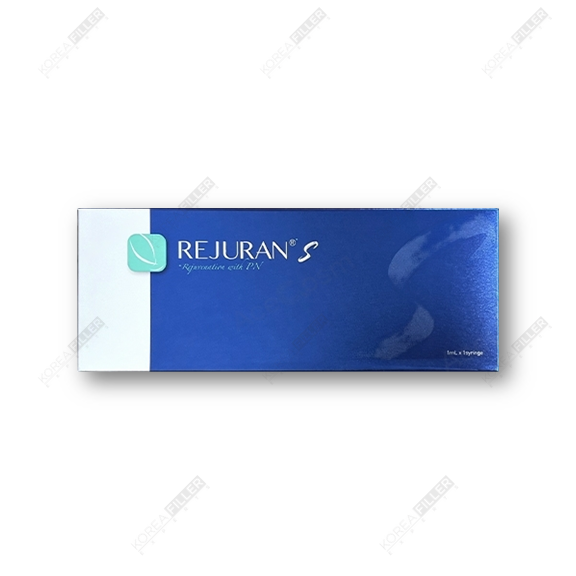
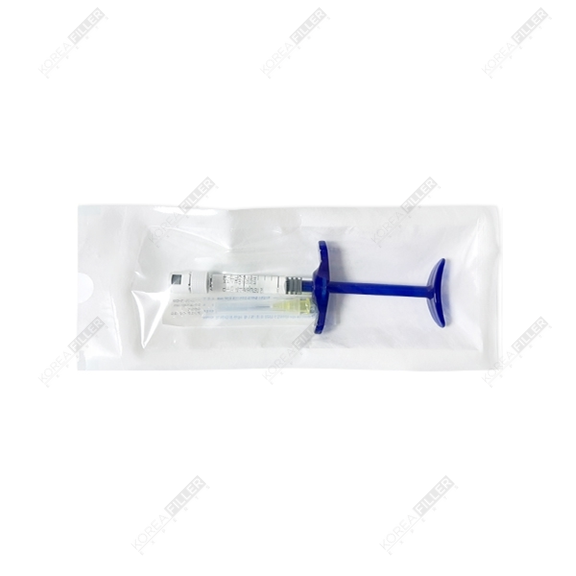
Rejuran S
High-viscosity polynucleotide for atrophic scars · 1 cc vial · PharmaResearch, South Korea. The densest formula in the Rejuran line.
$103.90
You save
Rejuran S is PharmaResearch’s highest-concentration PDRN formula, designed specifically for depressed and atrophic scar correction, delivering stronger regenerative power than other Rejuran variants.
Professional use only. This product is intended for administration by licensed healthcare practitioners trained in the relevant anatomy and injection technique. By ordering you confirm you are authorised to purchase and handle products of this class in your jurisdiction. Availability and permitted use vary by country — please verify local regulations before ordering.
Did you like this product? Add to favorites now and follow the product.

(+82) 10 7364 7998 Send a message on WhatsApp.
The scar formula — highest concentration in the range
Rejuran S is the scar-directed formula in PharmaResearch’s line: the same salmon-derived polynucleotide platform at the highest concentration and viscosity Rejuran offers.
Scar tissue is structurally different from normal dermis — disorganised collagen, altered fibroblast behaviour, and a matrix that has settled into a shape it will not leave on its own. Remodelling it takes a stronger and more sustained stimulus than improving healthy skin does, which is the reason this formula exists separately from Healer.
One thing to be clear about, because the previous version of this page was not: Rejuran S does not fill a scar. It is not a filler and adds no volume. It works by prompting the skin’s own matrix remodelling over months, so a depressed scar becomes shallower gradually rather than lifting on the table. If a patient wants immediate correction of a single depressed scar, a filler is the honest answer — not this.
Higher concentration and viscosity than Healer, Black or HB — built for tissue that resists remodelling.
Works through the patient's own matrix response over months. No immediate volume change.
For depressed and atrophic scarring. Not appropriate for raised, hypertrophic or keloid scars.
A denser formula and a larger needle mean more pronounced papules than any other Rejuran.
Why practitioners choose Rejuran S
Scar tissue needs a stronger stimulus than healthy dermis. This is the only formula in the line concentrated specifically for that.
Treatment improves the texture and density of the surrounding dermis as well as the scar itself, which is often what makes the overall result convincing.
Commonly used in combination with microneedling, subcision or fractional laser in acne scar protocols, at separate appointments.
Unlike a filler placed under a scar, nothing remains. The change is the patient’s own remodelled tissue.
Treatment areas and indications
Scar applications for high-concentration PN. All involve atrophic — depressed — scarring. Raised scars are a contraindication, not an indication.
Rolling and boxcar scars respond best, as both involve tethered or deficient dermis that can reorganise. Ice-pick scars, being narrow and deep, generally need combination treatment to change meaningfully.
Irregular texture left after inflammatory acne has settled, where the dermis has healed unevenly but no discrete scar has formed. Often responds more readily than established scarring.
Mature depressed scars from surgery or injury. Established scars remodel more slowly than recent ones — set the timeline accordingly.
Treatment improves the surrounding dermis as well as the scar itself, which is frequently what makes the overall result look convincing rather than patchy.
Skin boosters are injectable medical products. Which indications are permitted, and what training is required, is determined by the regulatory framework where you practise. Korea Filler Experts supplies the product; nothing here is a recommendation to treat any medical condition, and nothing here substitutes for manufacturer training.
What is inside Rejuran S
| Active | Polynucleotide (PN), salmon-derived |
| Viscosity | High — the densest in the Rejuran line |
| Concentration | Highest in the Rejuran line |
| Indication type | Depressed and atrophic scars |
| Anaesthetic | None — consider topical anaesthesia |
| Presentation | 1 cc vial |
| Typical course | 3–4 sessions, 2–4 weeks apart |
| Review interval | Commonly 6–12 months after a completed course |
| Route | Intradermal, into and around the scar base |
| Manufacturer | PharmaResearch, South Korea |
| SKU | 08035 |
Before you order
- Check the lot number and expiry on the carton against the vial.
- We do not dispatch stock with under 6 months of shelf life remaining unless agreed in advance.
- Store as stated on the carton. Do not freeze, and protect from light.
- Plan topical anaesthetic — no lidocaine in this formula, and it is the least comfortable in the line.
Scar work is course work. Expect three to four sessions minimum, and often more for extensive acne scarring. Tiered pricing applies from 5 units.
What each component does
Atrophic or hypertrophic — check before you treat
This determines whether Rejuran S is appropriate at all, and the old version of this page did not mention it.
- Atrophic scars sit below the surrounding skin — acne scarring of the ice-pick, boxcar and rolling types, chickenpox scars, some surgical scars. Tissue is deficient. This is what Rejuran S is for.
- Hypertrophic and keloid scars sit above the surrounding skin. Tissue is excessive, from an over-active healing response. A product that stimulates further matrix production is not indicated here and could reasonably be expected to make things worse.
Patients often present with both types from the same acne. Treat the atrophic component; manage the raised component separately.
Remodelling is not filling
It is worth being precise about how a depressed scar becomes shallower, because it governs what you promise.
A dermal filler placed beneath a scar lifts it immediately — the material occupies space, and you see the change on the table. Remove the filler and the depression returns.
Polynucleotide works differently. It prompts fibroblast activity and matrix production within the scar and the surrounding dermis, so the tissue reorganises and the depression becomes shallower over weeks to months. Nothing is left behind; the improvement is the patient’s own tissue. It is slower and generally more modest than filling, and it is more durable because it is structural rather than occupying.
A patient wanting one depressed scar corrected before an event needs a filler. A patient wanting diffuse acne scarring improved over months is the right candidate for this.
PN or PDRN?
Both terms describe purified DNA polymers from salmon or trout and are used interchangeably across most of the market. The distinction is molecular weight — PDRN generally shorter-chain, PN longer. A 2025 review proposed a 1500 kDa boundary, but that is a naming convention rather than a regulatory standard, and no controlled head-to-head study establishes that one outperforms the other.
How to use Rejuran S
Reference information for licensed practitioners. Scar treatment requires accurate assessment of scar type and realistic expectation-setting before any product is opened.
Step by step
-
Classify the scars first
Atrophic scars are candidates. Hypertrophic and keloid scars are not — stimulating further matrix production in already-excessive tissue is the wrong direction. Patients frequently have both.
-
Photograph and set expectations
Standardised photographs at baseline, in consistent lighting. Change is gradual and patients forget their starting point — photographs are what make the result visible at review.
-
Plan anaesthesia properly
The densest formula in the line, delivered through a larger needle into fibrotic tissue. Topical anaesthetic with adequate dwell time is essential.
-
Cleanse thoroughly
Standard antisepsis across the full treatment area. Acne-scarred skin may still be acne-prone — avoid treating over active lesions.
-
Inject into and around the scar base
Placement targets the scar itself and the immediately surrounding dermis. Working only at the centre of a depression misses the tethered tissue that holds it down.
-
Expect resistance
Fibrotic tissue resists injection and a high-viscosity formula compounds that. Slow, steady pressure — forcing produces uneven delivery and more trauma.
-
Warn about papules
More pronounced and slower to settle than with any other Rejuran formula. Say so before treating, and schedule away from social commitments.
Administration notes
Scar improvement is measured in months, not sessions. This is the expectation that determines whether the patient is satisfied. Matrix remodelling is slow, change between consecutive sessions is often imperceptible, and the result becomes obvious only when baseline photographs are compared against month three or four.
Telling a patient this at the outset — and photographing properly — is as much a part of the treatment as the injection.
Combination protocols usually outperform PN alone for significant acne scarring. Subcision addresses tethering, microneedling and fractional laser address surface texture, and PN supports matrix remodelling. Sequencing is a clinical decision, generally at separate appointments.
- Single use. One vial, one patient. Discard any remainder.
- Do not use on hypertrophic or keloid scarring.
- Avoid treating over active acne lesions or infected skin.
- Ask directly about fish allergy — the active is salmon-derived.
- Dispose of needles into a sharps container per local clinical waste requirements.
After treatment
- Papules are expected, more pronounced than with other Rejuran formulas, and may take longer than 72 hours to settle
- Redness, swelling and bruising are common for two to four days
- No make-up for 12 hours; keep the area clean
- Avoid saunas, steam rooms, swimming and strenuous exercise for 48 hours
- Avoid active skincare — retinoids, acids, vitamin C — for several days
- Strict sun protection; healing tissue pigments readily
- Book the next session before the patient leaves
Storing and handling Rejuran S
Store as stated on the carton and in the manufacturer’s insert, protected from light. Do not freeze — freezing damages the polynucleotide structure.
Allow the vial to reach room temperature. A cold high-viscosity formula is appreciably harder to deliver into fibrotic tissue and far more uncomfortable.
Single patient, single session. Do not retain an opened vial — there is no preservative system intended to support that.
Do not use if the solution is discoloured or contains visible particles, if the expiry date has passed, or if the packaging seal is broken. Dispose of unused product and used vials as clinical waste in line with local requirements.
What's included with Rejuran S
Needles and topical anaesthetic are not supplied; anaesthetic is strongly advised with this formula. Scar protocols usually run longer than standard skin-booster courses — plan ordering accordingly.
Rejuran S — frequently asked questions
What is Rejuran S?
The scar-directed formula in PharmaResearch’s Rejuran line — salmon-derived polynucleotide at the highest concentration and viscosity in the range, supplied as a 1 cc vial. It is injected into and around depressed scar tissue by a licensed practitioner.
Does it fill in the scar?
No, and the earlier version of this page was misleading on that point. Rejuran S is not a filler and adds no volume.
It prompts the skin’s own matrix remodelling, so a depressed scar becomes shallower over weeks to months. Nothing is left behind — the improvement is the patient’s own tissue.
If a patient wants one depressed scar corrected before an event, a filler is the honest answer. This is for diffuse scarring improved gradually.
Which scars is it suitable for?
**Atrophic** scars — those sitting below the surrounding skin. Acne scarring of the ice-pick, boxcar and rolling types, chickenpox scars, some surgical scars.
It is **not** appropriate for hypertrophic or keloid scars, which sit above the skin because of an over-active healing response. Stimulating further matrix production there is the wrong direction entirely.
Patients often have both types from the same acne — treat the atrophic component and manage the raised one separately.
How long before the patient sees a difference?
Months rather than sessions. Matrix remodelling is slow, and change between consecutive appointments is often imperceptible.
This is why standardised baseline photographs matter so much here. The result usually becomes obvious only when month three or four is compared against the starting point — patients genuinely forget how they looked.
How does it compare to Rejuran Healer or Black?
Same platform, higher concentration and viscosity, and a different target. Healer and Black treat general skin quality; S is formulated for the resistant, disorganised tissue of a scar.
It is also the least comfortable formula in the line — a denser product through a larger needle into fibrotic tissue, with the most pronounced papules afterwards.
Should it be combined with other treatments?
For significant acne scarring, usually yes. Subcision releases tethering, microneedling and fractional laser address surface texture, and PN supports matrix remodelling — they do different jobs.
Sequencing and intervals are clinical decisions, generally at separate appointments rather than the same session.
How many sessions does scar treatment need?
More than a standard skin-booster course. Three to four sessions is the minimum, and extensive acne scarring often needs more. Plan and quote the full protocol at consultation rather than selling it session by session.
How bad are the papules?
The most pronounced of any Rejuran formula, because the product is densest. They may take longer than 72 hours to settle.
Tell patients beforehand and schedule away from social commitments — this is not a Thursday-before-a-wedding treatment.
Is the salmon origin a concern for patients with fish allergy?
Ask about it directly. The active is purified from salmon DNA, and while purification removes protein, a stated fish allergy is a reason for caution and a conversation rather than an assumption.
Who can buy and use this product?
Injectable skin boosters are for administration by licensed healthcare practitioners trained in the relevant technique. Scar treatment additionally requires accurate scar classification and realistic expectation-setting. We supply to qualified professionals and do not sell to consumers.
Customer Reviews
Share your experience with this product. Your honest review helps other customers make better choices.
- Sort By
- Newest
- Oldest
- Highest Rating
- Lowest Rating
Nice to have a product designed for more targeted concerns. Glad we added it to our selection.
I'm happy enough to do it again.
The treatment itself isn't winning any comfort awards 😂 but I'd still repeat it.
Would I call the process fun? Absolutely not 😂 Would I repeat it? Yes.
Pricey but worth it for me. I'll definitely keep this one in rotation.
This wasn't a quick-fix treatment for me. The area I was concerned about gradually became less noticeable, and comparing older pictures made the progress much easier to appreciate.
I started because of one area that looked especially uneven in photos. It's not completely gone, but the improvement is enough that it doesn't immediately catch my eye anymore.
I had one stubborn textured area that always bothered me in side lighting. It's still there, just considerably less noticeable now. That's enough improvement for me to continue.
I wasn't expecting perfection, just improvement in one area that had been bothering me for a long time. I'm seeing enough progress that I'd continue the sessions.
I liked the focus on improving skin condition rather than only changing appearance. The treatment process takes commitment, but the results were satisfying.

Copyright 2026 © Korea Filler Experts. All right reserved.
